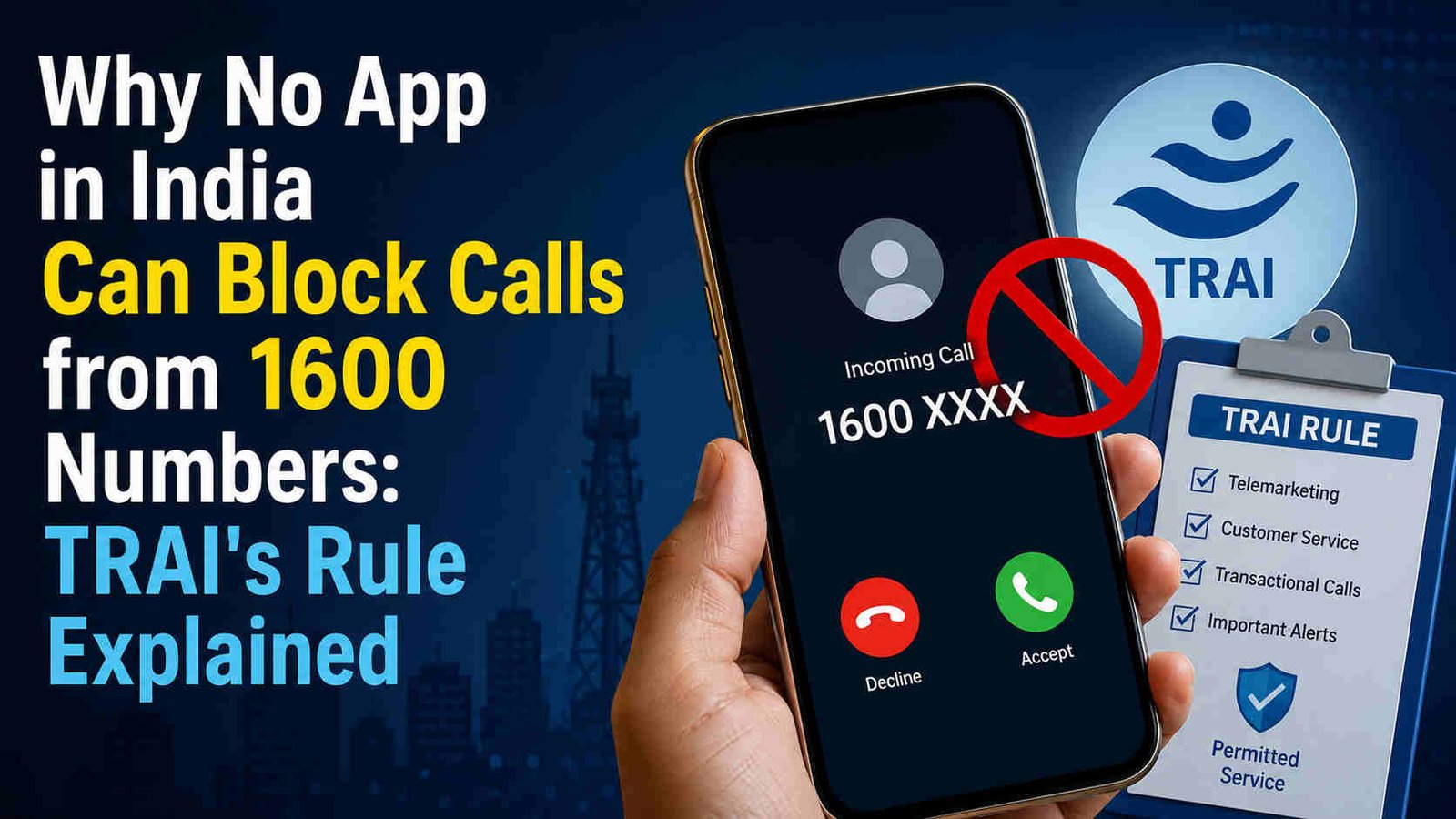
In recent regulatory guidelines release from the Telecom Regulatory Authority of India (TRAI), it has said that no mobile app in the country can block calls from 1600 numbers because such meant for communicating important messages/communications from regulated entities.
If you’ve ever wondered why certain phone calls continue to ring on your smartphone, in spite of using spam blocking apps like Truecaller and your phone’s built-in call filter, here’s the answer – a directive from the Telecom Regulatory Authority of India (TRAI). According to TRAI’s framework, no third-party app can block calls from the 1600 number series in India as the 1600 number series is reserved for service and transactional calls only.
According to TRAI, the measure seeks to strike a balance between preventing spam messages for consumers while ensuring users do not miss important calls related to banking, financial services or public interest. The guideline also has an update for number originating from140 series. It said that this series cannot be put on filtered or tagged as spam by apps. However users can block the same by using the DND registry as per TRAI.
What are the 1600 series numbers?
According to TRAI, the number series 1600 has been allotted for outbound calls of transactional and service nature, used by regulated entities such as banks, financial institutions, insurance companies, and other authorized organizations that need to convey important information to the customer.
Like:
* Alerts on Fraudulent or Strange Transactions
* help with OTP or account verification.
* Updates regarding loan or credit card application.
* Information on insurance claim.
* Notifications related to services.
* Crucial Communications for Customer Support
Why can’t apps could Truecaller block 1600 Calls
Apps like Truecaller use databases and spam detection systems to identify unwanted callers or spam callers. Nonetheless, NOW “you can’t automatically block calls from the 1600 series due to TRAI regulations” even after tweaking the aggressive spam setting.
The goal is simple: to help ensure that users do not accidentally miss a call that could alert them of potential fraud, verify a transaction or provide an urgent account-related update.
This regulation is also applicable to other call blocking solutions in the Indian telecom ecosystem.
How Can Consumers Benefit From This?
There are many benefits to the rule.
* Customers get all crucial alerts relating to banking and finance.
* Less likely to miss fraud prevention calls.
* Promotes speedier interactions when financial services injects urgent events.
* Develops a consistent identification system for vital external service calls.
A call from bank to customers in reasonable time prevents fraud transActivitis and assist them in resolving issues.
The Opposite Side of the Discussion.
Though the regulation has been passed to protect consumers, there is debate surrounding the regulation.
Privacy advocates say users ought to be able to completely block calls from numbers if they wish. Some specialists also warn that this 1600 number could provide loophole for unauthorized access causing misuse or professional scam.Conveying time critical information, TRAI deems calls from unknown numbers as essential and barred blocking of such calls by apps.
It is vital to make ongoing monitoring and enforcement so that only permitted organizations can use these protected numbers.
TRAI walks the Tightrope
TRAI has taken steps to reduce spam calls and protect consumer privacy in the past, such as the DND registry and tighter regulations on commercial communications.
But they also realize that there are times when consumers might need to receive pesky missed calls. Banks, Insurance companies, government departments, and other organizations regulated by TRAI would need to reach out to their consumers about information that can’t be postponed.
TRAI’s rule about the 1600 number series walks this tightrope- preventing pesky spam calls while allowing important calls from government departments and legitimate companies to reach your smartphone uninterrupted.
Conclusion
India’s burgeoning digital society and telecom regulations are constantly changing to strike the right balance between convenience, privacy, and public good. While you can’t block 1600 series numbers on any app, there will always be a good reason why calls from the 1600 series will not be blocked.
In the meantime, the best thing consumers can do is remain vigilant on every call, take a moment to verify if a caller is legitimate, and never share private information such as OTPs, Pins, CVVs, and internet banking passwords over calls. Even if your bank asks you for them, they will never be legitimate requests.