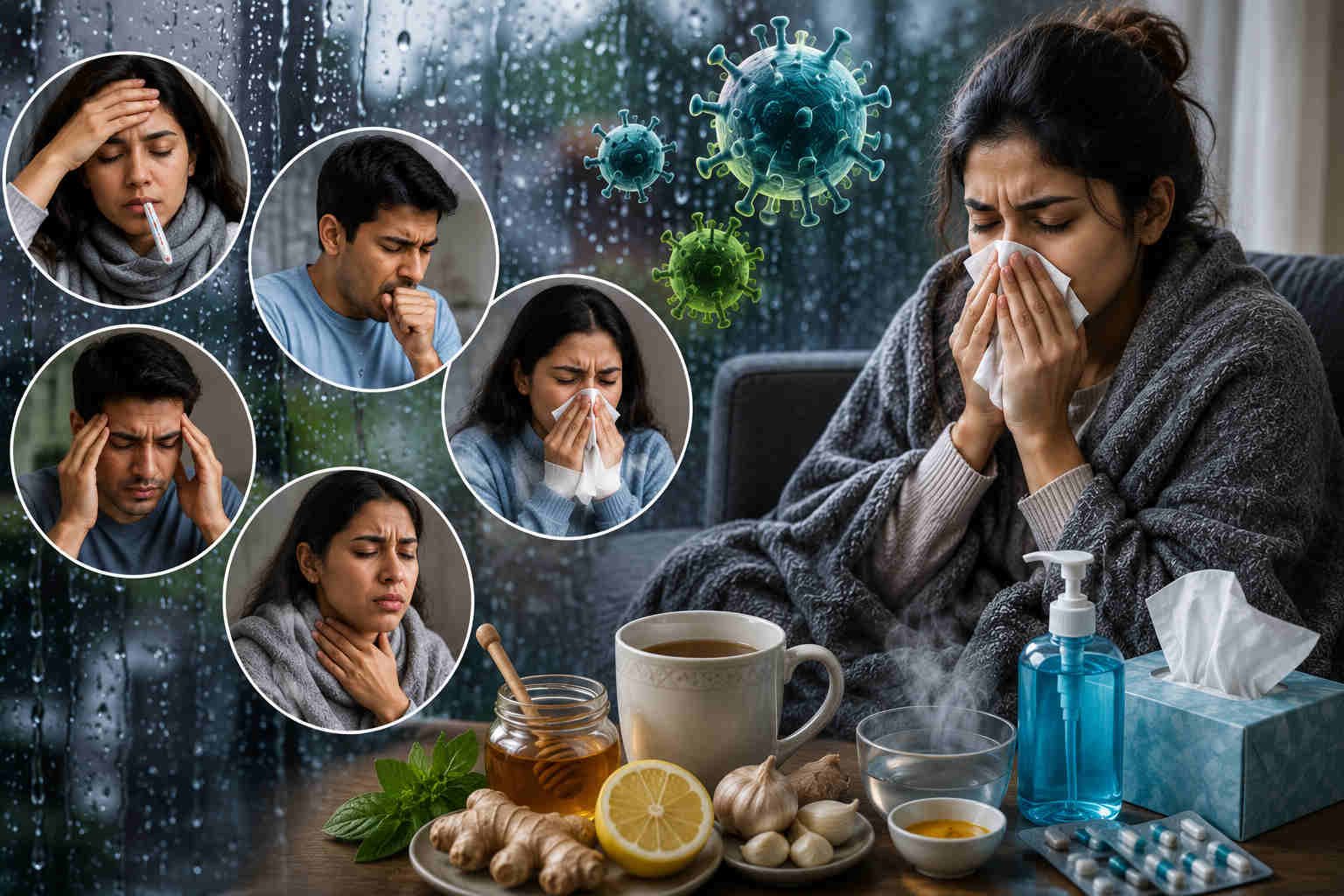
During monsoon season, the temperature gets cooler but at the same time the season also brings in loads of viral infections. Damp weather, stagnant water, and abrupt shifts in temperature is nothing but a breeding ground for bacteria & viruses which leads to many diseases:
Viral infections in Rainy Season.
- Viral fever is the most common illness during rainy season. Most cases start with fever, headache, body ache, weakness, and sore throat. Initially, the symptoms may seem mild, but they can become tiresome with neglect in many cases. Flu or influenza is also an infection of the season and often leads to fever, cough, congestion, fatigue, body pain and others.
- During monsoon, cold becomes common for many of us. Signs include sneezing, running nose, mild fever and sore throat. While it is not often serious in nature, its spread is fast in homes, offices, schools and crowded places. Viral gastroenteritis, commonly known as “stomach flu,” also affects your digestive system. It can cause vomiting, diarrhoea, stomach cramps and dehydration.
- Other health problems due to monsoon.
Viral conjunctivitis is also common during the rainy months. This condition creates itchy, red, and watery eyes and it can be transmitted through touch. There are not only viral infections but also increase in mosquito-borne diseases like dengue and chikungunya during monsoon season. Stagnant water are breeding grounds of mosquitoes which cause these infections.
Safety issues and Solutions.
Prevention is the key during monsoon.
- It is advisable to drink clean water, eat fresh food and avoid street food if you may not know the hygiene level.
- You must wash your hands often, use mosquito products, and keep your area dry and clean.
- Clear all standing water from containers, pots and open areas around your home.
When to get medical help.
Fever continues for longer than two days doctor has to see with vomiting or difficulty breathing or severe weakness or dehydration. Timely treatment may prevent complications and hasten recovery.