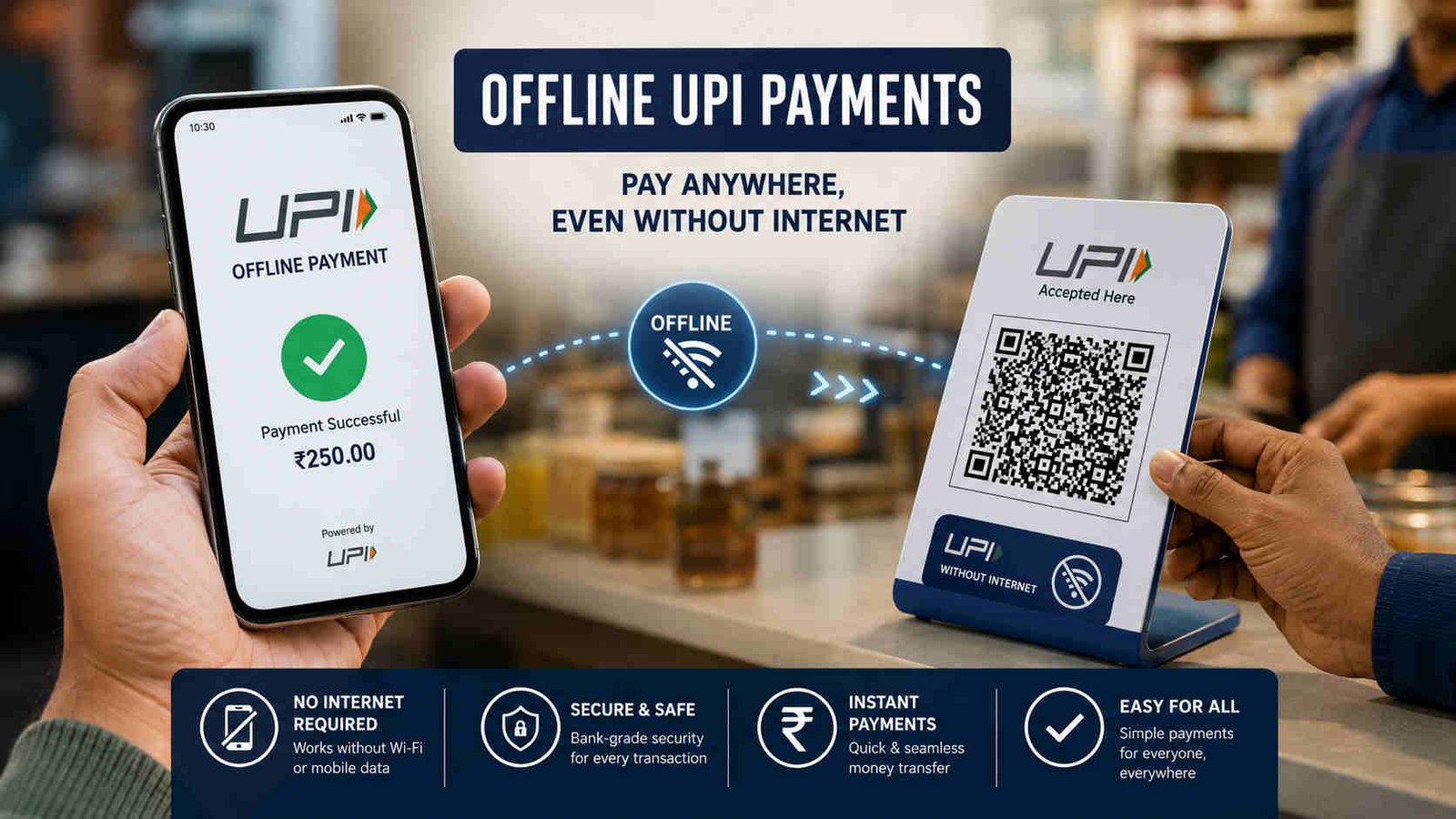
India is developing offline UPI payments that allow users to pay merchants without internet. Know how it works and what it means for digital payments.
Imagine travelling to the outskirts of a city or a place where internet connectivity is low and you are carrying no or very little cash with you. Amid such a situation, you need to buy emergency medicines, purchase groceries, or pay for transport. How will you tackle such a situation?
Making a digital payment even when there is no internet connection on your phone may sound unthinkable. Correct!
Don’t worry. This might soon be possible.
India is working towards enhancing offline options for UPI payments, which can facilitate digital transactions even when the network is weak or completely unavailable.
UPI has transformed the way Indians pay since its inception. From street vendors to bigger businesses, everyone can now accept payments through UPI QR codes. However, digital payments still rely on an active internet connection.
Offline UPI aims to tackle this challenge.
What Offline UPI Means?
Offline UPI is a payment system that does not require an internet connection to make payments.
Generally, UPI payments do not get executed unless there is a real-time communication with banks’ server. However, for offline payments, solutions will be used so that payment info can be processed without connectivity.
The objective is to enhance the accessibility of digital payments.
- Villages in the countryside.
- Rural areas.
- underground transit systems.
- Places where mobile signals are weak.
- In case of failure of network.
What is the working of offline UPI?
While the precise technology is under development, offline digital payments may leverage approaches such as.
1. Near Field Communication (NFC)
Like contactless card payments, NFC enables financial transactions between devices brought close together.
2. Payment Restrictions in Storage.
That’s called Stored Payment Limits. It may be allowed to make a small-value payment offline and once the device comes online, the transaction will update.
3. Technology of Digital Wallets.
A secured balance system enables users to make payments offline. They can sync the details later.
Why Is Offline UPI Important for India?
India possesses one of the world’s biggest digital payment ecosystems, but internet availability is patchy.
Connectivity issues can disrupt payments for small shopkeepers, farmers, daily wage workers and people living in far-off places.
- UPI without internet support may useful.
- Dependence on cash should be reduced.
- Bring more people into digital payments.
- Assist local businesses in rural areas.
- Facilitate transactions even during network downtime.
How will the common users benefit?
Offline UPI may cause fewer payment failures for common users. For examples you can make a payment at a roadside tea stall with poor network connectivity, or purchase necessities amid internet failures. You may also get to make emergency payments when not connected.
Is Offline UPI Safe?
Security will remain one of the biggest priorities. The payment happening is not verified by the immediate internet, thus systems will need strong safeguards like transaction limits, verification methods, fraud protection, etc.
The focus will be on making it easier without compromising banking security.
Digital Payment in India- Bright Future
UPI has already changed the way India pays. The next step is making digital payments available everywhere—not just where the internet works.