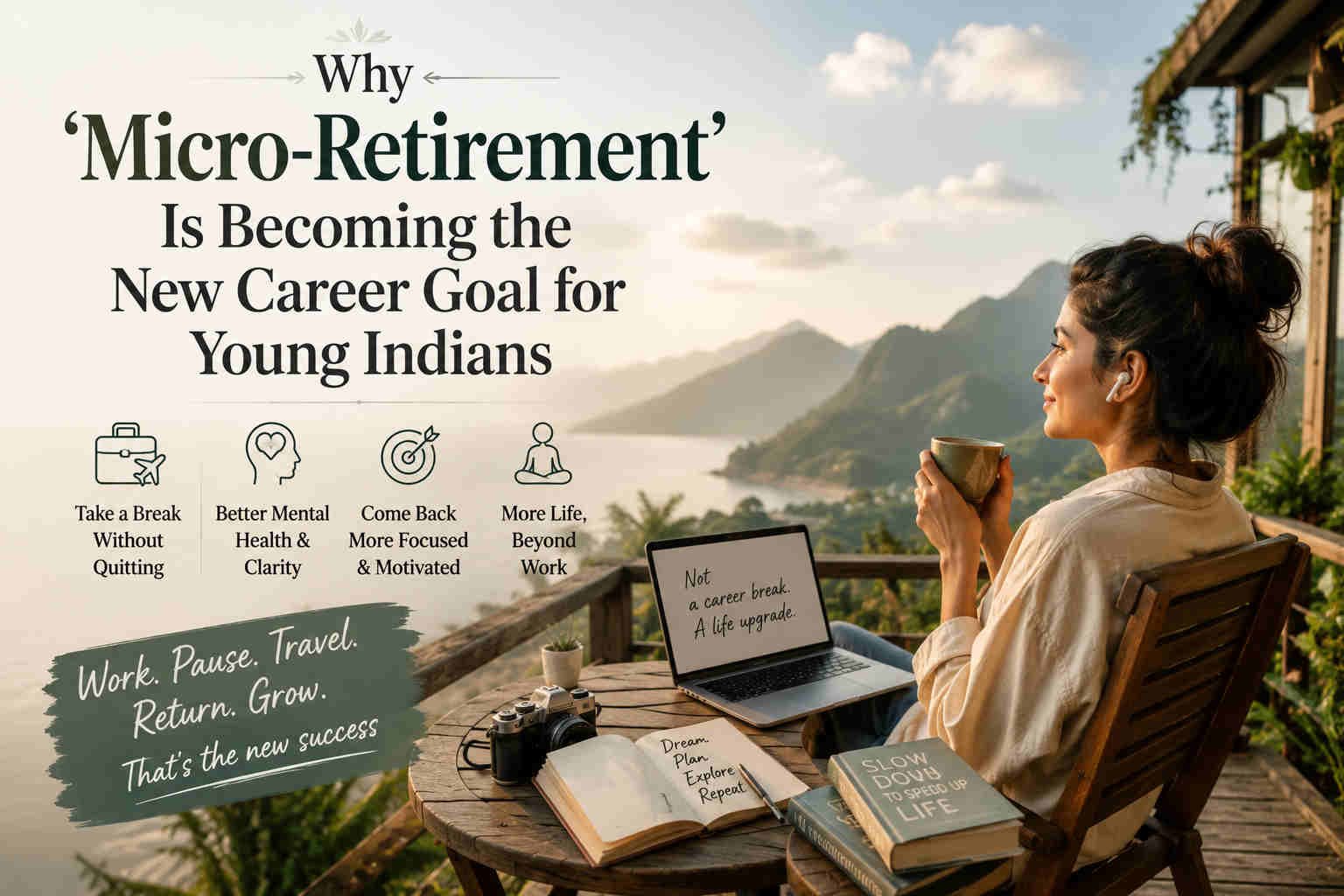
For many generations, retirement was keenly looked forward to after many decades of work; typically at the late 50s or 60s. A new lifestyle trend is making us rethink that. More and more young professionals are choosing to take a planned career break in their 30s and even late 20s, instead of waiting till the end of their careers to enjoy life.
Micro-retirement, as it is called, is gaining traction on foreign shores. It is slowly but surely finding favour in India, primarily among Gen Z and millennials who are more keen on experiences than career growth.
What is micro-retirement?
Micro-retirement does not mean you leave work forever. It is a break planned for a period ranging from a few weeks to months. During this time, people sometimes travel, volunteer, go to university, work on a passion project, spend time with family or simply take a mental break before returning to work.
The Mantra is: Don’t save everything for retirement but relish the different phases of life while you are young.
Quitting your job does not mean new job.
Micro-retirement does not mean quitting your job, which is one of the biggest misconceptions. Actually , this is nothing but a pause.
Many workers save up for years before they take a break, discuss sabbatical options with employers, or plan freelance work that earns some money while they’re away. We don’t want to give up on our long-term career goals.
The Reason Young Indians Are Considering It.
Workers in diverse industries are experiencing burnout. Working longer and longer hours, being ‘always-on’ and having to do more and more have made many professionals rethink work-life balance.
Younger generations are now putting more emphasis on experiences, mental health and self-discovery at the same time. People do not want to delay their travel plans, their learning or their time spent with loved ones much later.
Taking planned breaks has become easier in the last decade because of flexible jobs and remote working.
Can You Afford to Take a Break from Your Career?
You can but the core word is financial planning. For a successful micro-retirement experts recommend having an emergency fund set aside for a break that will cover expenses. Don’t forget to include medical insurance, loan repayments and a realistic budget for travel or learning objectives as well.
It should not be an impulsive decision. Avoid funding your time away from work with credit cards or other loans.
Is It Popular in India?
While micro-retirement may not apply to every profession, it is becoming more realistic for entrepreneurs, freelancers, consultants, remote workers and staff whose organisations offer sabbaticals.
Career experts suggest that the best way to make a come back easy is to maintain your professional connections and upgrade your skills constantly.
At the end of the day, micro-retirement isn’t about avoiding responsibility. It’s about creating a healthier relationship with a job. All the more Indians are giving as much importance to their well-being as they are to ambition. This makes it possible that taking a well-planned break is as crucial as taking a step up on the professional ladder.