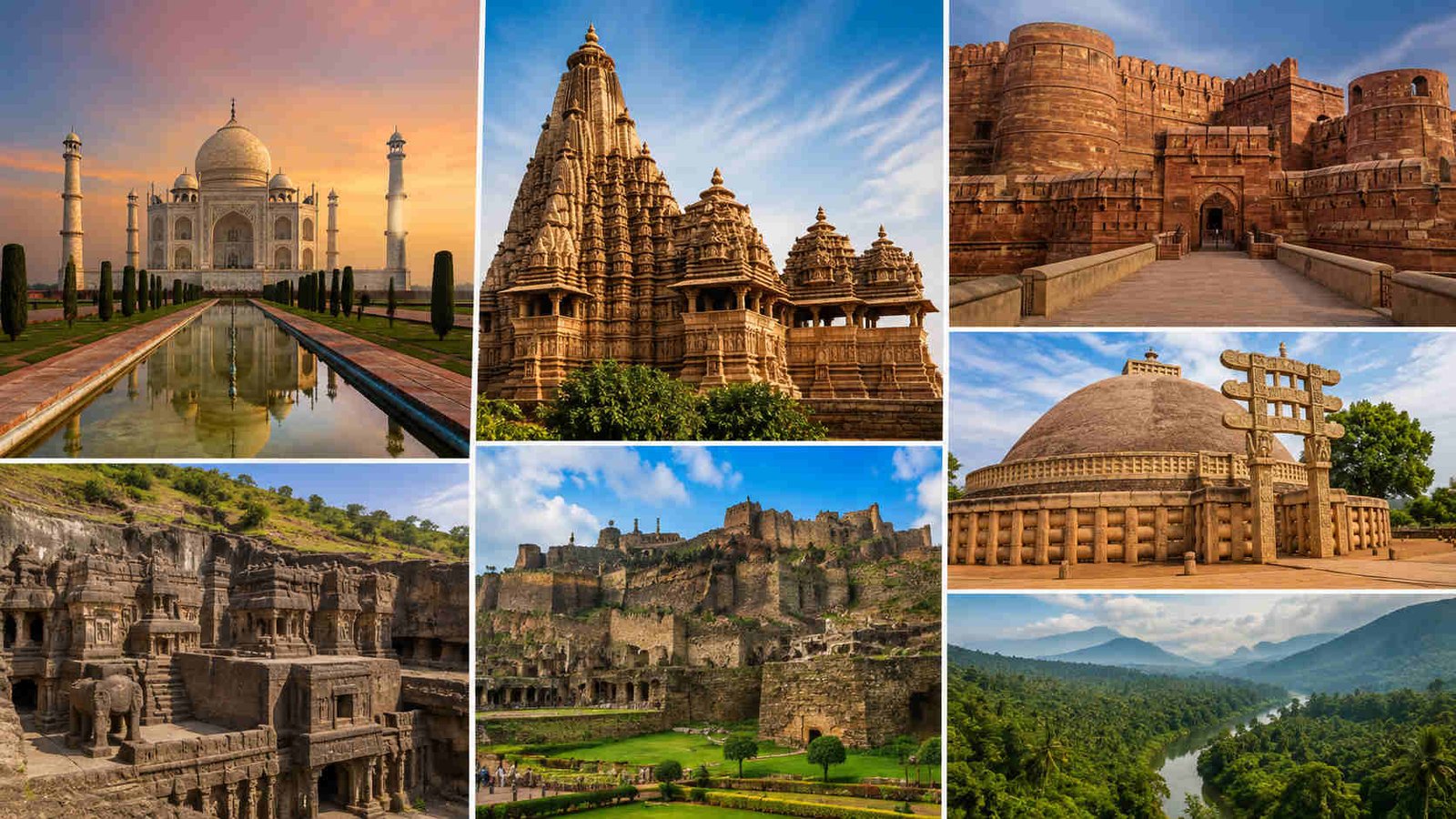
The Taj Mahal and Jaipur’s Pink City are two sites every Indian is familiar with. However, there are many UNESCO World Heritage Sites in India that are still unexplored by many Indian travellers These places are full of history, natural beauty and remarkable architecture that you won’t believe you haven’t heard of yet. Include these on your travel list for 2026, if you are looking for an offbeat experience and are a travel enthusiast who prefers lesser-known destinations with stories and no tour groups.
Rani ki Vav, Gujarat
Located about 130 km from Ahmedabad in Patan, Rani ki Vav is not your typical stepwell, it’s a five-levels-underground architectural wonder that features hundreds of exquisitely carved sculptures from the 11th century. Visit this UNESCO site early in the morning to witness the most mesmerising play of light as well as get ample time to capture it on your camera without the crowds.
Champaner-Pavagadh Archaeological Park, Gujarat
Ahmedabad is the gateway to Champaner-Pavagadh, and yet not many tourists venture out for this UNESCO site. The beautiful forts, temples, palaces, mosques and stepwells in this place weave the history of Hindu and Islamic architectural and cultural fusion in a stunning landscape. Consider this UNESCO site if you’re looking for a heritage trip without the crowds.
Great Living Chola Temples, Tamil Nadu
It’s the Brihadisvara Temple in Thanjavur, Tamil Nadu that steals all the limelight, but the UNESCO listed temple group of the Chola empire also includes the awe-inspiring Gangaikonda Cholapuram and Darasuram temples. Centuries old, these are the perfect examples of Dravidian temple architecture that are still in use for religious activities, and make for great places to visit for tourists as well.
Bhimbetka Rock Shelters, Madhya Pradesh
About 45 km from Bhopal lies one of the oldest known human settlements in India at Bhimbetka Rock Shelters. Dating back to prehistoric times, the caves are full of rock paintings, some as old as a few thousand years, which depict scenes of hunting, dancing, and everyday life. They are a must-visit for every traveller who is fond of history and archaeology.
Khangchendzonga National Park, Sikkim
Most UNESCO heritage sites are just monuments, not natural locations. This is one place in India where natural beauty and cultural significance combine to make a UNESCO World Heritage Site. If you are an eco-traveller and looking for a trekking experience in the Himalayas, then do not miss the snow-capped peaks, alpine lakes, glaciers and rare wildlife at Khangchendzonga National Park. You can visit the park in April to June and September to November.
A New Trend in Travel – Exploring the Hidden Gems of UNESCO Sites in India
Travel these days is less about visiting the places you’ve seen everyone else visit. It’s more about making unique memories and having experiences that no one else has. Discovering lesser-known UNESCO World Heritage Sites allows you to explore places with fewer crowds, have more enriching interactions with the local culture, and not to mention, there are some stunning locations waiting to be photographed for your next viral reel. They are different, and will ensure a more immersive travel experience.
So instead of visiting places that you have seen on other people’s feeds, why not plan your next trip with one of these UNESCO sites in India that are yet to hit the list of hotspots? After all, you’ll come back with stories to tell, instead of selfies.