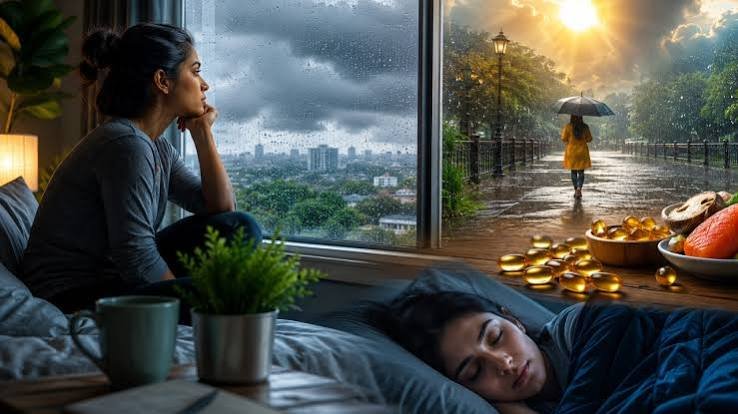
The monsoon brings intermittent bouts of heavy cloud cover in cities like Mumbai, Kolkata, Kochi and Bengaluru. It can last for days or weeks at a time. If you’re spending more time inside due to rain, flooding or work-from-home life, there’s less sun exposure and this can impact vitamin D synthesis, sleep schedules and mood.
Does rainy weather make you tired?
Does cloudy weather affect vitamin D levels?
Yes, cloudy weather can limit vitamin D production in the skin. When exposed skin receives ultraviolet B radiation (UVB), your body produces vitamin D. Clouds, smog, rain, having darker skin, sunscreen, clothing and limited outdoor exposure can decrease UVB rays. Studies in India have found vitamin D deficiency to be widespread between all age groups. Seasonal differences may impact vitamin D levels as well.
You may get some UVB rays on an overcast day if you spend time outside. But if you’re indoors by a sunny window, that won’t give you enough UVB either. Ordinary window glass filters it out.
Why does monsoon make you sleepy?
Less sunshine and dimmer indoor lighting can make you feel tired. Many of us get less exposure to bright light first thing in the morning. Without enough morning light, the body’s sleep-wake cycle can shift. That makes us tired and sleepy during the day, especially when late rising coincides with less activity and more screen time.
It’s normal to feel low-energy and lethargic after being indoors for too long. That’s separate from vitamin D deficiency, although the two can overlap. Low vitamin D levels can cause vague symptoms like tiredness, muscle aches, weakness or body pain. So can many other medical problems.
How much sun exposure is enough?
There isn’t a one-size-fits-all amount of sun exposure. Your skin colour and type, age, clothing, season, location, amount of cloud cover and pollution all affect how much time you need outdoors. Sun intensity also varies based on geography.
Experts in vitamin D have offered different recommendations. A broad suggestion is 5 to 30 minutes of sun exposure between 10 a.m. and 4 p.m. on most days of the week. Make sure to expose your skin without sunscreen for those few minutes. This should include sunlight exposure of your face, arms, hands or legs.
For Indians, aim for a short walk outside or open balcony when weather and air pollution allow. Avoid getting sunburned or damaging your skin. Darker skin tones may require more sun exposure time outdoors. Older adults produce less vitamin D from sunlight than younger adults.
Should I take supplements?
Try not to self-prescribe high-dose vitamin D supplements. Too much vitamin D can build up in the body because it’s a fat-soluble vitamin. High levels might cause symptoms such as nausea and vomiting. It can lead to severe complications like high calcium levels, kidney stones or kidney damage.
If you experience fatigue, muscle aches, bone pain or have reasons to suspect low vitamin D levels, speak with a doctor. They might suggest a blood test to check levels. Indian guidelines state there is no standardized method of checking and treating vitamin D deficiency for every Indian adult.
How else can you boost vitamin D in monsoon?
- Eat fortified dairy or plant-based drinks if available. Fortified milk, yoghurt or certain plant milks (soy, oat, almond or buffalo milk) are examples.
- Consume egg yolks and vitamin D-rich fish like sardines, salmon or mackerel.
- Try UV-treated mushrooms if you follow a vegetarian diet.
- Go outside during the day instead of only using indoor lighting. Avoid midday sun if you’ll burn. Keep your sunlight exposure safe.
- Keep a regular sleep schedule with a set bedtime and waking up time.
- Ask your doctor about supplements before starting medication doses that are meant to be prescribed.
As long as you eat a varied diet and live an active life, too little sun over a few weeks isn’t likely to harm you. If you’re feeling tired all the time for several weeks or it interferes with your day-to-day activities, don’t chalk it up to “the monsoon.” Talk to a doctor.