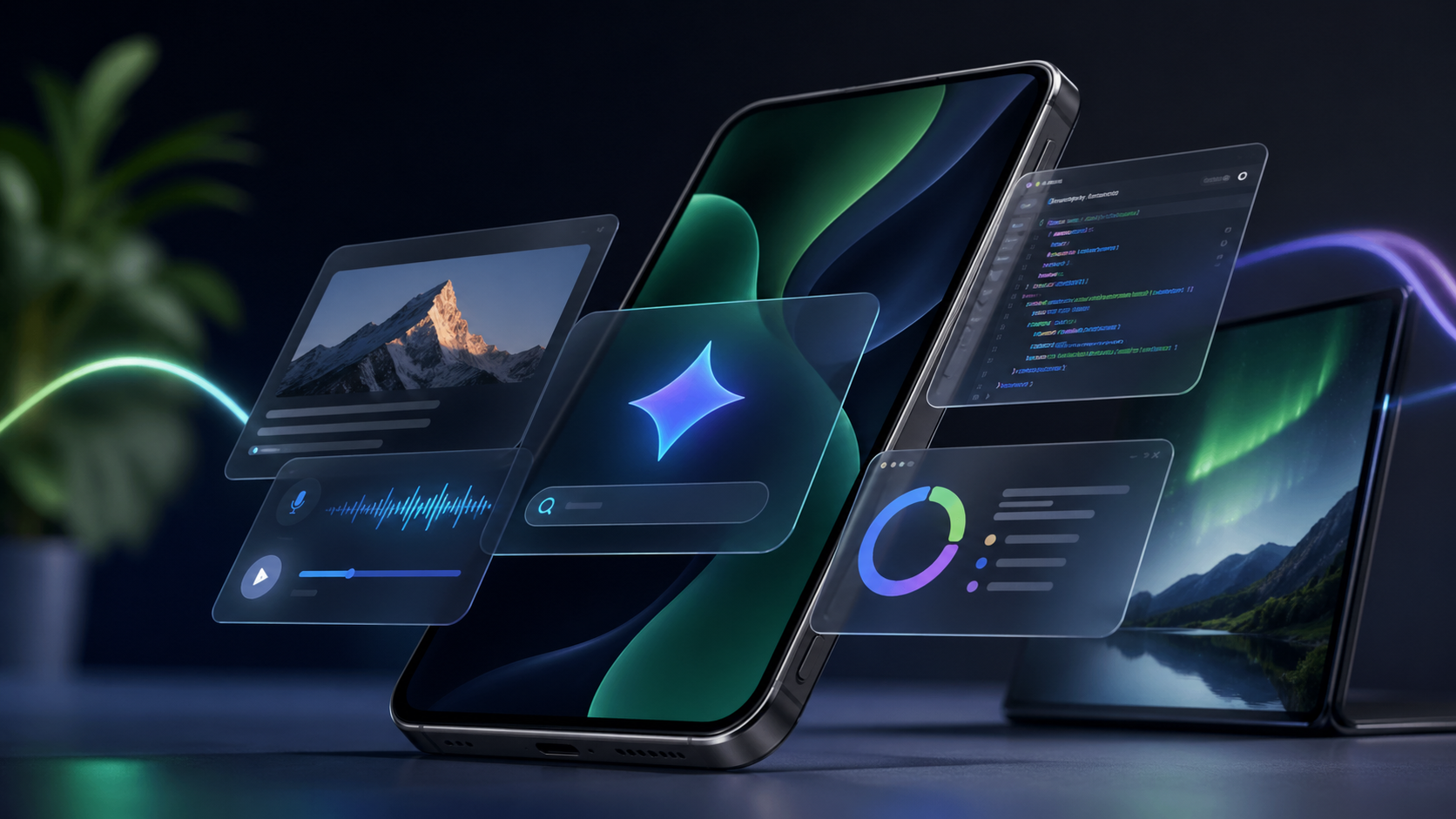
If you thought smartphones were supposed to get you from point A to point B with a few taps, Google’s Gemini AI could soon change that. The search giant has started embedding new features of its Gemini AI under the hood in Android. The tool could now understand what’s happening on your phone’s screen, interact with other apps and handle tasks that might otherwise take several steps.
Google started rolling out the latest Gemini features for specific Pixel and Samsung Galaxy devices on Android, with the promise of wider availability in the future.
Gemini Is Going Deeper Into Smartphones
One important distinction about Gemini is that, rather than just providing an answer, it is being designed to actually get things done for you.
For instance, you could potentially:
- Search for a restaurant and help with booking.
- Turn a grocery list into an online order.
- Compare travel options.
- Find a booking confirmation in Gmail.
- Create a calendar event from an email or message.
- Draft a reply to a message.
- Read a document or image and summarise what’s important.
For tasks involving purchases, bookings or other sensitive data, Gemini may still ask you to review and approve the last step.
Gemini in Chrome Could Summarise Boring Articles
A common exercise in smartphones is to read a long webpage or article only to scroll through several screens of text before finding what you’re looking for. Gemini in Chrome browser will be able to summarise a webpage, answer questions about what you’re reading or help compare information.
Talking, Not Typing
Google is also developing a speech-to-text feature called Rambler, which is designed to turn a person’s natural speech into cleaner, more formal-looking written text. Rather than copying and pasting all the “umms”, pauses and repeated words from your recorded voice into a message, Google says it can tidy up what you have said.
That could be handy in India, where people increasingly dictate WhatsApp messages, notes, emails, and other content rather than typing – especially in a mix of English and Indian languages.
Gemini Daily Brief May Bring a Virtual Assistant Closer
Gemini’s Daily Brief feature could collate useful information from connected services and previous Gemini interactions into a morning summary. In practical terms, that could mean important messages, events, and reminders all in one place, rather than checking several different apps.
Gemini Could Handle Tasks in More Than 40 Apps
On some supported Samsung devices, Google says Gemini will be able to take action across more than 40 popular apps. Gemini can understand what is on your phone’s screen and receive updates from it to “see” as you use your phone.
That could mean getting new information from Gmail and bringing it to Gemini, then asking it to perform tasks using those details. A more open Google Assistant API that allows more apps to integrate could eventually open similar possibilities for third-party apps.
There’s a Caveat
The more useful Gemini becomes, the more apps it may need to access. Giving an AI assistant access to Gmail, Photos, Calendar, Maps or shopping services means giving it access to information from parts of your life. Check permissions and connections, and don’t give an AI access to something it doesn’t actually need.
You also shouldn’t assume that just because an AI assistant has created an answer it is always correct. It can easily misunderstand a request, pick the wrong item or get some details wrong. Before confirming a booking, a payment, an order, or sending an important message, double-check the details for yourself.
The Bottom Line: Google’s Gemini Goes Deeper Into Android
The evolution of Gemini is not really about another chatbot sitting in a phone, it’s about the potential for having one assistant that can connect some of the things that you already do across different apps.
But whether that becomes genuinely useful will depend on other factors such as Indian-language support, the services available locally, the prices of compatible devices, and how well these features work on everyday Android smartphones.
The best AI phone may in the end be the one that doesn’t constantly try to show off how smart it is. It may be the phone that saves you a few minutes here and there, every single day, without taking control away from you.