Can your skin reveal what’s happening inside your body?
In short yes.
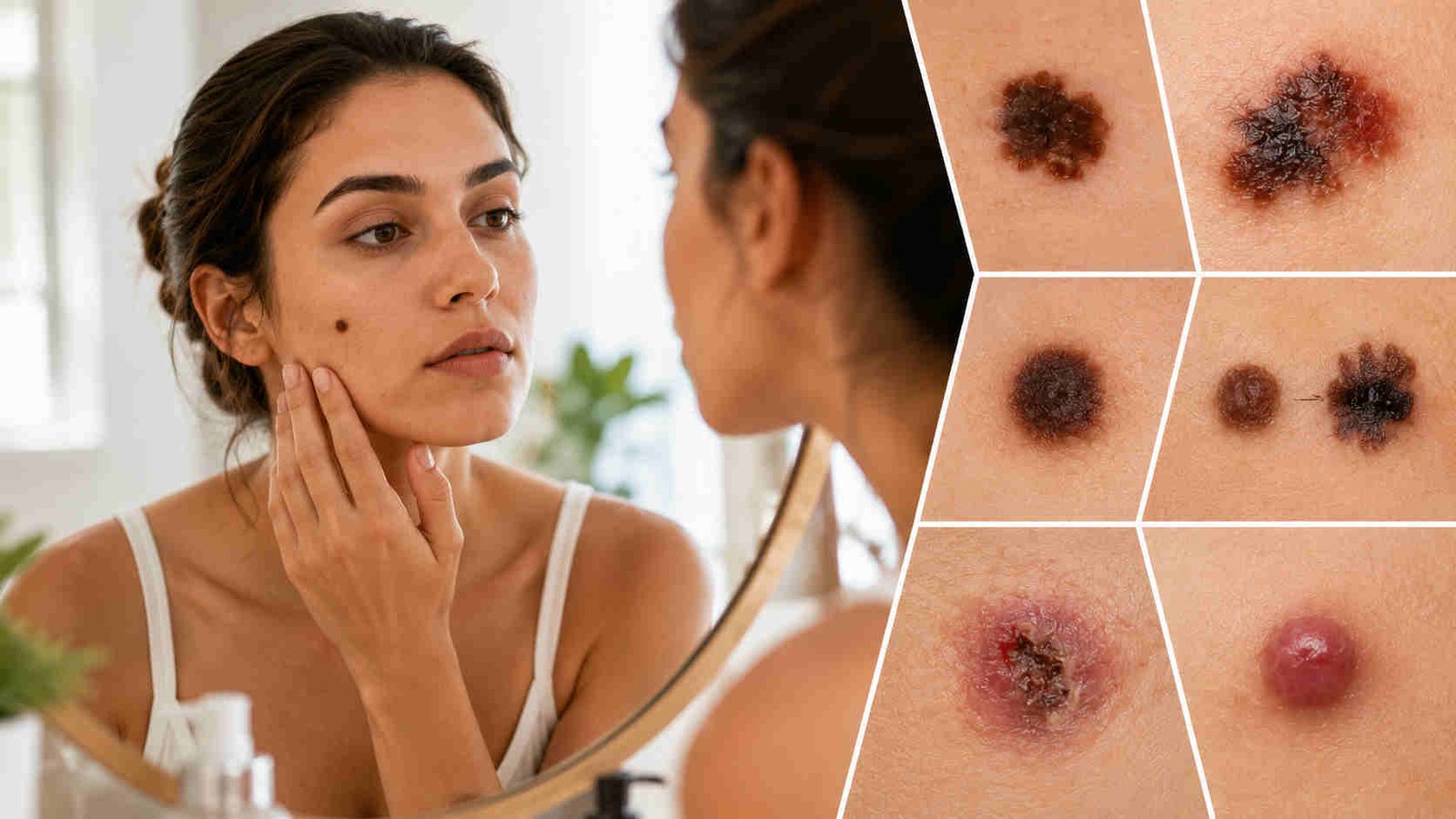
First and foremost, whenever you see a change in your skin (especially face, scalp, chest, arms, and legs) in form of a new growth, a change in color of mole or a skin rash that’s not healing, don’t ignore. These can be early warning signs of skin cancer—or, less commonly, other underlying cancers.
Knowing what to look for can help you seek medical advice early. It’s important to remember that these symptoms do not necessarily mean cancer, but they should never be ignored if they persist or worsen.
1. A Mole That Changes Shape, Size or Colour
One of the best-known warning signs is a changing mole. Dermatologists recommend following the ABCDE rule (also called A-B-C-D-Es of skin cancer):
A – Asymmetry (irregular shape)
B – Irregular Border
C – Multiple Colours
D – Diameter larger than 6 mm
E – Evolving or changing over time – most important sign
2. A Sore That Doesn’t Heal
Any sore, cut, or ulcer that remains for more than three to four weeks deserves medical attention, particularly if it bleeds or crusts repeatedly.
3. Persistent Itching Without a Clear Cause
Persistent itching can result from many common conditions, but in some cases it may be associated with skin disorders or, less commonly, certain internal cancers. If itching continues without an obvious explanation, it’s worth discussing with a doctor.
4. Unusual Bruising or Tiny Red Spots
Frequent unexplained bruising or clusters of tiny red or purple spots (known as petechiae) may sometimes indicate blood-related disorders, including certain cancers. These symptoms require prompt medical evaluation.
5. Yellowing of the Skin
Yellow skin (jaundice) is often linked to liver or bile duct problems. In some cases, it can also be associated with cancers affecting these organs. Because jaundice always requires medical assessment, it should never be ignored.
6. New Dark Patches or Thickened Skin
Sudden darkening, thickened skin, or velvety patches—particularly around the neck, underarms, or groin—are usually linked to insulin resistance but, in rare cases, may be associated with certain internal cancers.
7. New Lumps Under the Skin
A painless lump beneath the skin doesn’t always indicate cancer, but any lump that enlarges, persists, or changes should be examined by a healthcare professional.
When Should You See a Doctor?
Seek medical advice if you notice:
- A mole that’s changing.
- A wound that doesn’t heal.
- Persistent itching without a cause.
- Unexplained bruising.
- Yellowing of the skin.
- A new or growing lump.