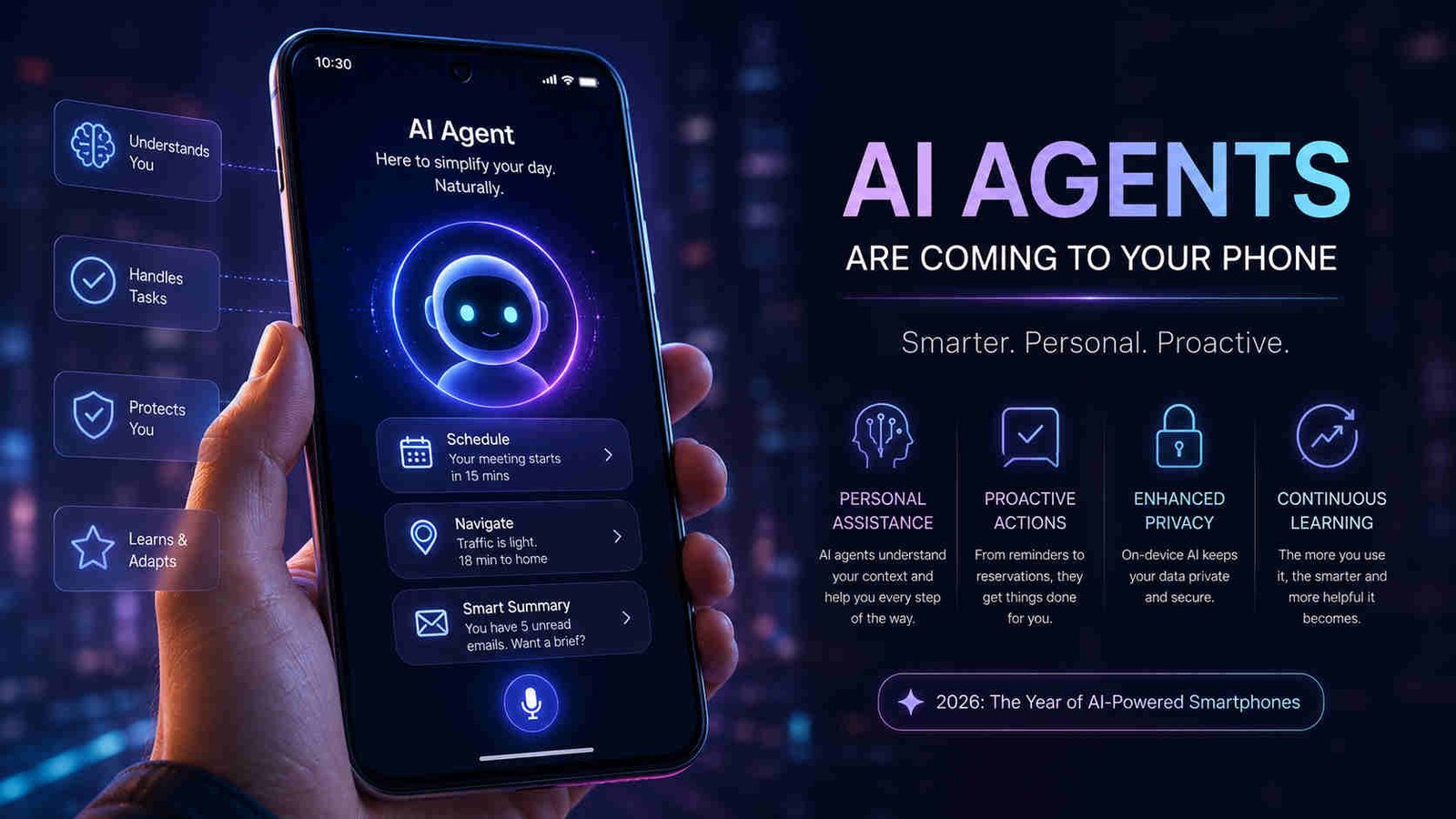
Are you sick of downloading new apps on your phone? You might not have to.
Picture this: you are asking – “Schedule my Saturday night in Mumbai for under ₹2,000” to your phone, and having artificial intelligence compare destinations, build an itinerary and assist you in accomplishing your goals instead of switching through Google, Maps, booking apps and messages. That’s the promise of AI agents, one of the biggest trends in smartphone tech coming in 2026.
Indian Millennials and Gen Z are already developing a rapport with AI: A CyberMedia Research study conducted in July 2026 revealed that 71% of Indian Millennial smartphone users aged 18-35 use generative AI features multiple times a week. Another 59% said AI would impact their buying decisions when buying a new smartphone.
So first, what is an AI agent?
A traditional chatbot answers your queries. An AI assistant helps you find information or maybe complete some task. But an AI agent takes it a step further -it’s created with the goal of understanding your intent and completing potentially multiple actions for you.
It’s the difference between asking “Where should I eat?” versus “Find me a good vegetarian restaurant near my college, check if they have availability at 7 pm and help me reserve a spot for dinner.”
Smartphone technology is edging closer to this “actionable” experience.
How will AI Agents Change Our Phone Usage?
Smartphones have been designed around apps for the better part of a decade now. Hungry? Open your food delivery app. Lost? Open Google Maps. Want to book tickets? Open another app and search.
AI agents promise to change this behavior by acting as the interface through which you access these services. Instead of memorizing which app does what, you’ll tell your AI what you want, and it can guide you through the process.
That has the potential to be huge for Millennials and Generation Z who are balancing college, work, travel and social schedules.
What Can Your AI Agent Do for You?
Your AI assistant can potentially:
- Travel: Allow you to compare flights, hotels and things to do based on your preferences.
- Shop: Compare products and specifications based on price, features and reviews.
- College: Help you organize research, notes and assignment due dates.
- Work: Coordinate calendars, emails and maybe even automate repetitive tasks.
- Life: Help you make plans based on your budget, location and free time.
The keyword there is “potentially” — your ability to do these things will depend on what devices, software, permissions you have and what services your AI can communicate with.
The Catch.
The more your AI can do for you, the more information about you it may need.
An AI agent managing your calendar, shopping or travel preferences can potentially access very personal aspects of your life. That’s why privacy, security and user permission are going to be just as important as convenience moving forward.
Another CMR 2026 study found that 82% of Indian consumers said clear data practices would help them trust smartphone AI more.
AI agents have the chance to not only provide you information faster, but actually help you do things on your phone. It all comes down to how comfortable we are with giving AI that much control.