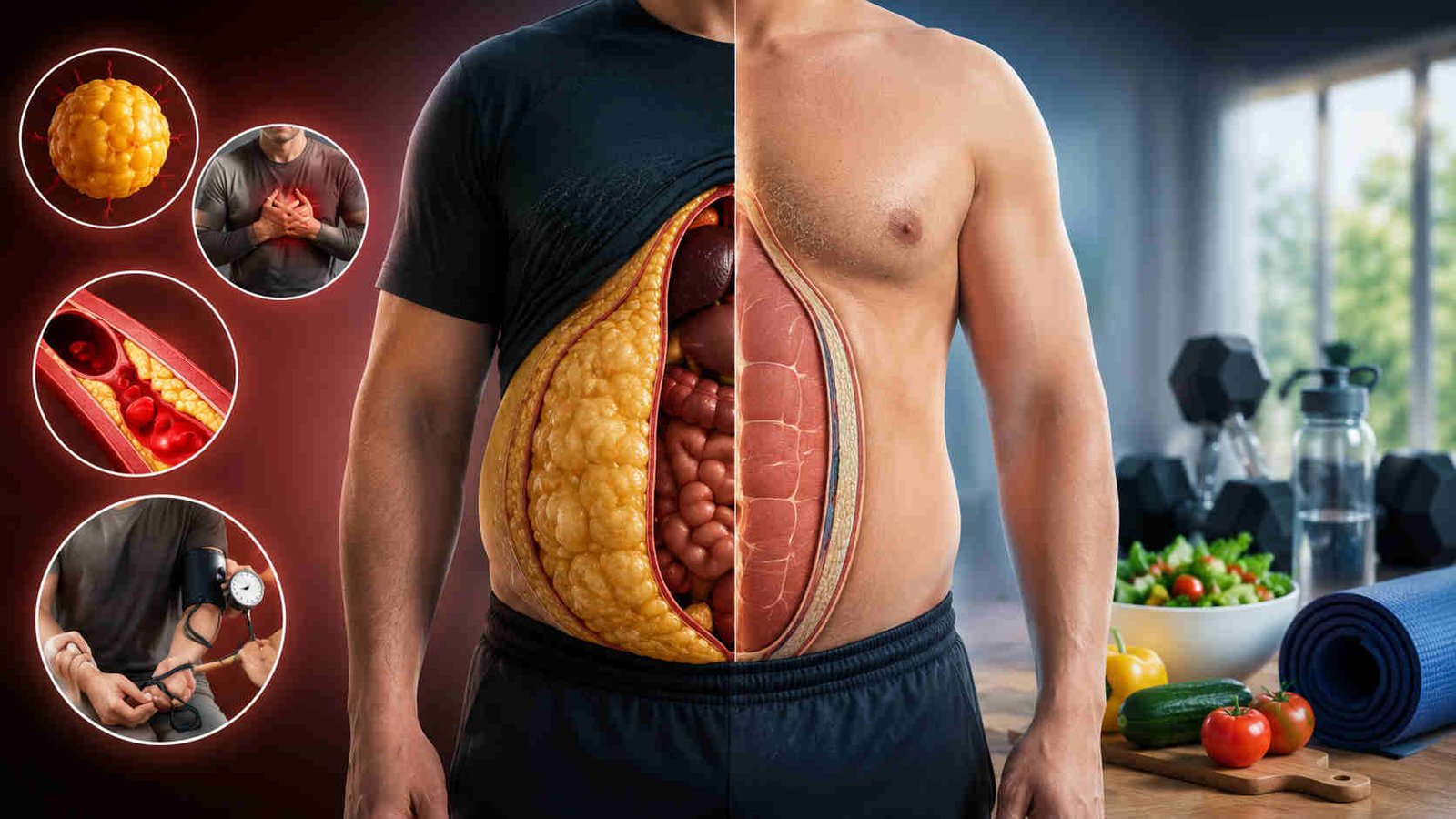
Body fat is usually thought of as the fat found near the skin in most people a layer under the skin. Visible fat is not the only one. One of the worst types of fat is visceral fat known as hidden belly fat which wraps around essential organs including the liver, pancreas, and intestine. In contrast to the easily pinched subcutaneous fat, visceral fat which lies beneath the abdomen increases the risk of many diseases.
Health professionals consider excess visceral fat as one of the risk factors for heart disease, type 2 diabetes, high blood pressure, stroke, and metabolic syndrome. The positive aspect is that lifestyle changes will help reduce it.
What is visceral fat?
Fat stored deep in the abdomen surrounding many vital organs is called visceral fat. The body needs a small amount of this fat for protection from diseases but too much can become harmful. It performs vital functions like controlling blood sugar level and fat metabolism. It is also a place where inflammation takes place like in the case of obesity.
Visceral Fat: The Danger It Poses.
Visceral fat, unlike the fat beneath the skin, has been connected to a higher risk of deadly diseases. Research has indicated that when there is excess visceral fat in a person’s body, it can cause insulin resistance. Consequently, the mechanisms that lead the body to regulate blood sugar become affected.
It can also be linked to high blood pressure, bad cholesterol, fatty liver disease, and heart disease. Even individuals of normal body weight can possess excess visceral fat. Hence, regular health check-ups are critical!
Are You Aware That You Might Have Visceral Fat?
You cannot measure visceral fat by just looking in the mirror. A wider waistline, however, may suggest greater abdominal fat levels. In certain cases, your doctor may suggest an assessment of your body composition or a CT or MRI scan. When you go for check-ups, waist measurement, BMI, blood sugar, cholesterol, blood pressure can give hints about your metabolic health.
What are ways to reduce visceral fat?
The way to reduce visceral fat is not a crash diet but consistent change in lifestyle. Advised by experts.
• Applying regular physical activities like brisk walking and strength training.
• Consume a well-balanced diet. Your daily diet plan should be rich in vegetables, fruits, whole grains, some lean protein, and healthy fats.
• Restricting sweet beverages, packaged foods, and too much refined carbohydrates.
• Spending seven to nine hours sleeping every night.
• You can manage stress by yoga, meditation or similar techniques.
• Stay clear of smoking and limit drinking.
Achieving a modest decline in body weight can help reduce the presence of visceral fat.
The Final Outcome.
While you can’t see visceral fat, it’s still harmful to your health. Because it develops in silence, many people remain conceiving of the dangers until health problems occur. By knowing your risk, living well and consulting with your physician, when necessary, you help prevent heart disease, diabetes and other metabolic disorders.
If you have concerns about excess abdominal fat, a family history of diabetes or heart disease, or other risk factors, consult a qualified healthcare professional for an assessment and personalised guidance. Early action can make a meaningful difference to your long-term health.